


A new house is a cherished dream for all home buyers and therefore proactive measures should be taken towards mitigating risks such as damages incurred due to water leakage. As the widely known phrase correctly states, “A stitch in time saves nine”, any proactive effort towards risk mitigation initiatives such as waterproofing through the usage of quality materials and expert workmanship could prevent more pain later.
One of the main concerns many people face while undertaking the construction is finding the right guide as a checklist to help to get waterproofing done correctly. There is a need for people to know the answers to the following questions; Why, Where and How to Waterproof – and ensure a leak-free home for one’s family.
Why waterproof:
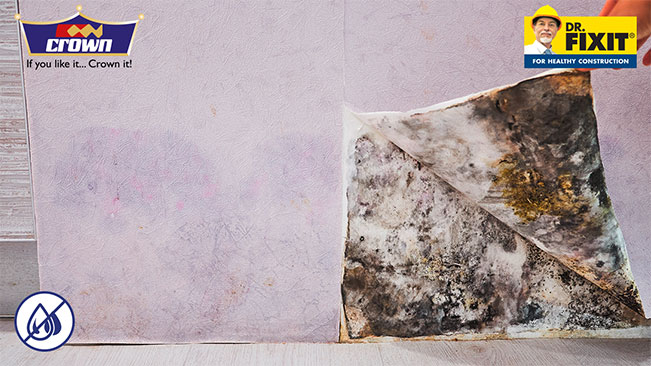
Water ingress on any construction surface causes issues such as corrosion and cracks, which may further lead to structural damages in the long run. Similarly, dampness on walls contributes to mould growth, this is one of the many causes that lead to respiratory diseases such as asthma. Therefore, it is highly important to waterproof one’s home to prevent future mishaps.
Most new homeowners ask about the need for chemical waterproofing, especially considering that their house is recently constructed. It would, therefore, be pertinent to point out that in recent years the housing construction has largely witnessed a deterioration in the quality of sand and concrete blocks.
There is also an influx of unskilled labour force that has reduced the quality of craftsmanship, the varying climatic changes are resulting in weather becoming extreme for construction; unlike the olden days. Lastly, fast construction time resulting in lower time for curing and setting of construction materials reduces the strength of the overall structure.
All these issues necessitate the need for new homeowners to undertake waterproofing and other proactive measures for their newly constructed homes, to ensure a long-lasting and beautiful structure.
Where should one waterproof:
Some new homes include basic waterproofing, which at times is only restricted to roofs, but it is imperative to have proper waterproofing done at all water entry areas to make the home, “A 5-Point leak-free Home”. A 5-Point leak-free Home means waterproofing not only the roof but also internal wet areas (bathrooms, kitchens and balconies), exterior walls, concrete water tanks and below ground areas.
It is important to understand that different surfaces are exposed to diverse kinds of challenges; hence the solution for each of these surfaces should be best-in-class, to have the right kind of waterproofing. The home will be fully protected only when all five possible water entry areas are properly waterproofed. These five surfaces are crucial and here are some reasons:
- Below ground – Groundwater rises over a period and enters your home, damaging internal walls.
- Internal Wet Areas (Bathroom, kitchens and balconies) –These areas are exposed to water for 365 days, causing seepage and peeling of paint on internal walls.
- Roof – Temperature changes, as well as wear & tear cause cracks on the roof surface, leading to water leakage & dampness on your beautiful ceilings.
- Concrete Water Tanks – These water tanks due to the formation of cracks are susceptible to leakages, through the tank surface. Hence it is important to correctly waterproof this area.
- Exterior Walls – Temperature changes cause cracks in exterior walls, leading to damp patches and therefore tainting the overall look of your house.
If a new homeowner is confused about how to ensure top-notch quality waterproofing with optimum and long-lasting protection, then they should without hesitation follow the 5-Point leak-free Home procedure; for a comprehensive waterproofing.
How to waterproof:
Waterproofing comprises of two components which are integral and layer. To give you a basic analogy, during the cold weather we eat food such as raisins etc. to keep our body warm and provide ourselves inner strength; this is an example of why any construction surface requires integral waterproofing.
Subsequently, one doesn’t only rely on inner strength during the cold season; they also wear warm clothes to fend themselves from the harsh weather; this facet denotes the need for layer waterproofing.
To put it briefly, integral waterproofing is done to improve the concrete/ mortar quality, this helps in increasing the durability of the foundation and reducing water permeability. Whereas, layer waterproofing is done to prevent future crack inducement; in the outer structure.
For a G+1 house of up to 100m² only takes 450USD (KSH45,000/-) of waterproofing material, which would essentially be (1-2) % of the overall construction cost. Therefore, in a small fraction of construction cost, one can insure their homes from harm for years to come.
Conclusion:
A properly undertaken waterproofing ensures that the risk of future damage is eliminated, and home valuation protected. However, waterproofing is inappropriately looked upon as an additional burden and a vast majority forgets to ponder about its larger benefits; especially in the case of new construction homes.
To conclude, “Waterproofing must be taken into consideration as an investment and not as a cost”.
